
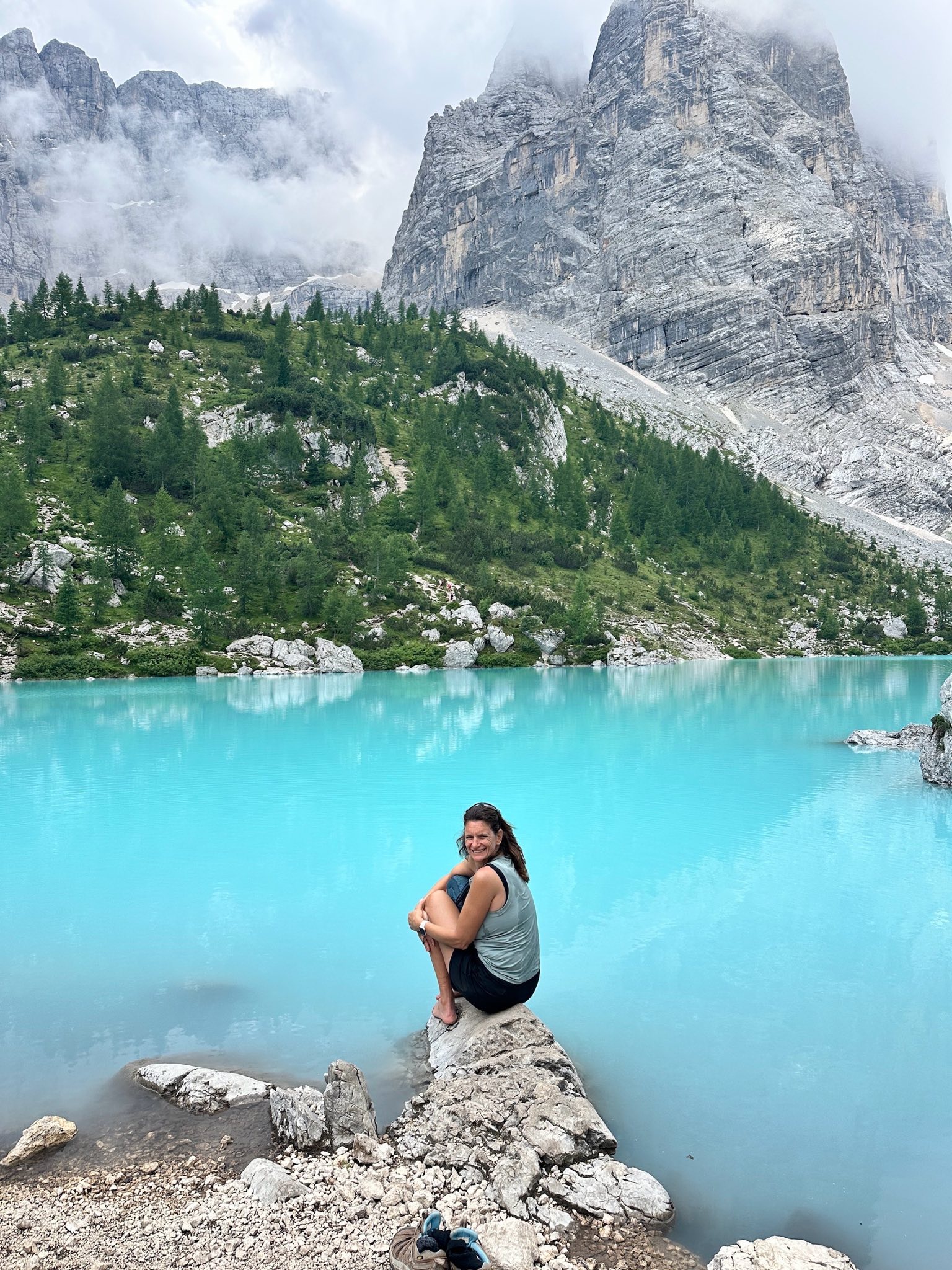
The Italian Alps: Stunning Mountains, Lakes and Adventure
Cortina, Italy, captured the world’s attention during the 2026 Winter Olympics.. And with good reason. Switzerland usually gets most of the attention when it comes to the Alps, but the Dolomite section of the Alps is beyond stunning. The Italian Alps have it all, from UNESCO World Heritage landscapes and exhilarating outdoor adventures to charming mountain towns, luxurious hotels, exceptional dining, indulgent spas, boutique shopping, and a renowned wine region.
We recommend exploring Cortina d’Ampezzo and Brixen in South Tyrol, two standout destinations that showcase the very best of the Italian Alps. Here’s why this region is worth the journey.
Lago di Braies
Lago di Braies sits at the end of a narrow mountain valley in the Fanes-Sennes-Braies Nature Park, and the water is an almost impossible shade of turquoise-green fed by glacial meltwater. The iconic red and yellow wooden rowing boats sit at the dock, ready to be photographed. You can rent one and drift on the lake amidst the stunning colors and mountain backdrop.
The loop around the lake is flat and easy. Many people stop at the viewpoint near the dock and turn around. If you are up for a walk, the far side is quieter, and the views are even more dramatic.
Cortina d’Ampezzo
Cortina hosted the Winter Olympics in 1956 and again in 2026, and it carries that legacy with style. This is one of Italy’s most glamorous mountain resort with beautiful hotels, world-class restaurants, and excellent shopping. The mix of high-end boutiques and traditional Ampezzo craft shops and galleries is genuinely charming.
The 68-meter bell tower of the Basilica dei Santi Filippo e Giacomo anchors the piazza, and there are often concerts in the square in front of it.
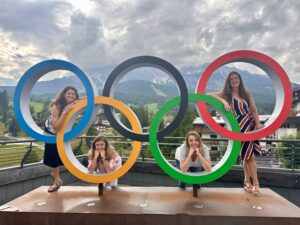
Cortina is the base for a host of hiking and adventure activities, or you can simply enjoy the town. You can walk Corso Italia, the pedestrian path the Olympians took for the opening ceremonies, or take that classic photo op with the Olympic rings in front of the mountains. Sit in the square for a coffee or at a rooftop bar for an Aperol spritz.
Tre Cime di Lavaredo
If you’ve ever admired a photograph of the Dolomites, there’s a good chance it featured Tre Cime. The three iconic limestone peaks, the unofficial symbol of the entire Dolomites, rise to nearly 10,000 feet, and the loop trail around their base is the most famous hike in northeastern Italy. The views are stunning and always changing. The north face is vertical and sheer and the south side opens into a wide alpine panorama with the valley below.
You can do the full 6.2-mile hike, just enjoy the looking out, or take an easy 30-minute walk to one of the Rifugios for a snack, strudel, or cocktail. Refugios are something Italy does really well, and it can completely change your hiking experience for the better!
Lago di Sorapis
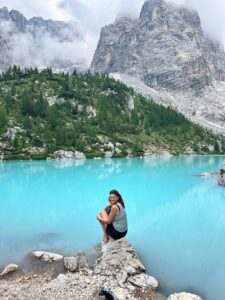
This was by far my favorite hike in the Dolomites. It wasn’t the easiest, and it doesn’t have an easy look-out option. It’s about 7.5 miles round-trip. The trail from Passo Tre Croci delivers panoramic Dolomite views almost immediately, but the payoff is really at the end.
The destination is a glacial lake with water so milky turquoise-blue it looks unreal. It’s a totally different kind of beautiful from Lago di Braies. That type of water surrounded by vertical walls just feels powerful.
And of course, this is Italy, so there’s a Rifugio at the top where you can reward your hiking efforts with an apple strudel and espresso. Or lunch and a glass of wine (or beer).
Via Ferrata
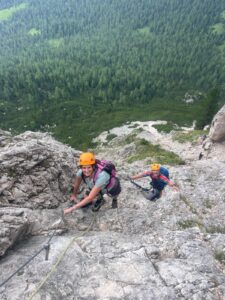
Italy is the home of the via ferrata or “iron path.” During World War I, the Dolomites became a battleground between Italy and the Austro-Hungarian Empire, and the Italian troops bolted permanent metal cables, iron rungs, and ladders into the rock to make it possible to get supplies across near-vertical limestone cliffs.
Today, tourists can climb them, and Italy is one of the best places for via ferrata. Think of it as assisted rock climbing. Tour operators will take you with no experience required. If you ever wanted to feel like you are on the side of a mountain (but do it safely), this is the place to do it.
And the history is fascinating. Our guide took us through old WWI tunnels and trenches. This is not for anyone afraid of heights, but if you are in moderately good shape, it’s completely doable.
Brixen
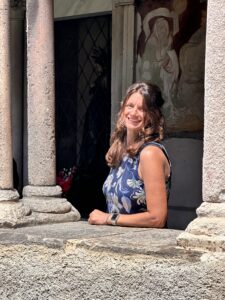
After days in the dramatic scenery around Cortina, Brixen is a completely different kind of wonderful. Officially known as Bressanone in Italian and Brixen in German (everything is bilingual here), this small South Tyrolean city is beyond charming.
The old town has arcaded streets, pastel-painted buildings, a cathedral square with amazing architecture, and the 14th-century Hofburg Bishop’s Palace anchoring it all. Take a stroll with a gelato, it’s amazing.
South Tyrolean cuisine is a blend of Italian and Austrian. Speck appears frequently. There are hearty bread dumplings served in broth or alongside braised meats. And one of my favorite dishes, Schlutzkrapfen, South Tyrol’s version of ravioli stuffed with ricotta and spinach, served with browned butter and sage.
Wine Tasting in the Eisack Valley
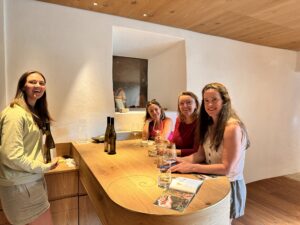
Most people don’t picture vineyards when they picture the Alps, but the hills around Brixen are full of vines. It’s not the commercial vineyards of a Napa Valley, but a small, charming experience.
We had a private tour of Kuenhof-Peter Pliger, a small family estate producing fantastic white wine (and I’m usually a red drinker), particularly their Kerner and Sylvaner. The daughter-in-law of the owner, who lived onsite, was absolutely lovely and shared so much of the history of the region and what it was like to marry into a wine family.
Kloster Neustift is housed in a beautiful 12th-century Augustinian abbey where monks have been making wine for over 800 years. We spent an enjoyable afternoon sipping great wine amidst the ancient stone architecture and mountain scenery.
It’s worth the hype.
Few places capture the imagination quite like the Dolomites. From breathtaking mountain vistas and shimmering alpine lakes to picturesque villages, exceptional dining, and unforgettable adventures, this is the kind of destination that stays with you long after you’ve returned home.
From luxury mountain retreats to unforgettable alpine adventures, we’ll craft an Italian Alps itinerary designed just for you. Contact us!
About the Author
Michelle Zlakowski is a Runway Travel advisor, specializing in outdoor adventure and family travel experiences for any activity or adventure level. Follow Michelle on Gravatar
